Wednesday, May 28, 2014
So, today in class we had a test, which is probably going to hurt my grade in this class because I and the whole class, didnt study half the stuff that was on there, so personally i felt cheated. I study all the notes and half of it was stuff that was not there so it was very unfair. Also i had an eraser thrown at my head and could have taken my head off which i think was so incredibly cruel.

Tuesday, May 27, 2014
Today we took notes for our test tomorrow
Middle Ages= Medieval period
AD 476- AD 1453
Medieval Europe is
fragmented
This new society has roots in:
-classical heritage of Rome
-Beliefs of the Roman Catholic
Church
-Customs of various Germanic
Tribes
Overrun the western half of the
Roman Empire
Causing:
-disruption of trade
-downfall of cities
-population shifts to rural
areas
Effects of Invasion:
Declining of learning
-tribes had oral tradition,
songs, but couldn’t read Greek or Latin
-Romance Languages evolve
(French, Spanish, Portuguese, Italian)
-few besides priests were
literate
-Germanic warriors' loyalty is
to the lord of the manor he provides them with food, weapons, treasure Result:
-no orderly government for large
areas
-small communities rule
-Clovis rules the Germanic
people of Gaul, known as the Franks (Which is where "France comes from)
-in 496 he has a battlefield
conversion- he and 3000 of his warriors became Christians
-In 520, Benedict writes rules
for monks:
-Vows of poverty (live simply in
monasteries)
-Chastity (no marital relations
-Obedience (listen to church
superiors)
-his sister Scholastica writes
rules for nuns
-they operate schools, maintain
libraries, copy books
Church revenues are used to help
the poor, build roads, and raise armies
-this is a theocracy( one
dominant religion)
-Gregory's spiritual kingdom (
Christendom) extends from Italy to England, from Spain to Germany
-Clovis descendants include
Charles Martel, known as Charles the Hammer
-Hammer defeats a Muslim raiding
party from Spain at the battle of Tours in 732
-Charles Martel's son is Pepin
the Short
-Son #2 is Charles , known as
Charlemagne, meaning Charles the Great
-became the most powerful king of all time
-his son- Louis the Pious- was ineffective
-Louis' three sons- could figure out who to be king- split up kingdom at the Treaty of Verdun in 843 AD
Friday, May 23, 2014
-Middle Ages = medieval period
-476 – 1453 AD
-(from the end of the Roman Empire to the conquest of Constantinople by the Turks)
-medieval Europe is fragmented
-this new society has roots in:
-classical heritage of Rome
-beliefs of the Roman Catholic Church
-customs of various Germanic tribes
overrun the western half of the Roman Empire
causing:
-disruption of trade
-downfall of cities
-population shifts to rural areas
-476 – 1453 AD
-(from the end of the Roman Empire to the conquest of Constantinople by the Turks)
-medieval Europe is fragmented
-this new society has roots in:
-classical heritage of Rome
-beliefs of the Roman Catholic Church
-customs of various Germanic tribes
overrun the western half of the Roman Empire
causing:
-disruption of trade
-downfall of cities
-population shifts to rural areas
Decline of learning
-tribes had oral tradition, songs, but couldn't read Greek or Latin
-Romance languages evolve (French, Spanish, Portuguese, Italian)
-few besides priests were literate
-Germanic warriors' loyalty is to the lord of the manor
-he provides them w/ food, weapons, treasure
Result:
no orderly government for large areas
small communities rule
"I would die for my chief, but I see no reason to
pay taxes to a king I don't even know. So there."
-Clovis rules the Germanic people of Gaul, known as the Franks (which is where "France" comes from)
-in 496 he has a battlefield conversion - he and 3000 of his warriors become Christians
-the Church in Rome likes this
-by 511 the Franks are united into one kingdom, with Clovis and the Church working as partners
Church + Frankish rulers = rise in Christianity
-In 520, Benedict writes rules for monks:
-vows of poverty (live simply in monasteries)
-chastity (no marital relations)
-obedience (listen to church superiors)
-His sister Scholastica writes similar rules for nuns
-they operate schools, maintain libraries, copy books
-Pope Gregory I (Gregory the Great) goes secular (worldly power)
-Church revenues are used to help the poor, build roads, and raise armies
-This is a theocracy
-Gregory's spiritual kingdom (Christendom) extends from Italy to England, from Spain to Germany
-Clovis rules the Franks in Gaul until his death in 511
-Most of the rest of Europe consists of smaller kingdoms (seven in England alone)
-Clovis' descendants include Charles Martel, known as Charles the Hammer (great name!)
-Hammer defeats a Muslim raiding party from Spain at the Battle of Tours in 732
-(If he hadn't won, western Europe could have become part of the Muslim Empire - that's huge!)
-Charles Martel's son is Pepin the Short
-He works with the Church and is named "king by the grace of God) by the Pope (Popes can do that?)
-Pepin the Short dies in 768, leaving two sons
-Son #1 - Carloman - dies in 771
-Son #2 is Charles, known as Charlemagne, meaning Charles the Great
-Six feet four inches of rocking ruling warrior greatness!
Tuesday, May 20, 2014
- 511 AD- Clovis unites Franks into one kingdom
- 600 AD- Church + Frankish rulers convert many
- fear of the Muslims in southern Europe spur many to become Christians
- Monasteries and convents
- 520 AD- Benedict wrote the rules for monks and monasteries
- Poverty, chastity, obedience, study
- His sister Scholastica did the same for nuns in convents
- 731 AD- the Venerable Bible wrote a killer history of England
- Monks opened schools, maintained libraries, and copied books (Bibles, Greek text)
- European Empire Evolves
- Franks control largest European Kingdom
- The Roman province formerly known as Gaul
- Ruled by Clovis- the Merovingian Dynasty
- Major domo- mayor of the palace- ruled the kingdom
- Charles Martel- Charles the Hammer
- extended the Franks' reign to the north, south, and east
- Defeated a Muslim army from Spain at the Battle of Tours in 732- historic battle
- Charles the Hammer's son- Pepin the Short
- Possibly named for his unusual short haircut
- Working for and with the Pope, Pepin fought the Lombard's
- Pope Stephen II named Pepin "king by the grace of God" beginning the Carolingian Dynasty 751- 987 AD
- Pepin the Short had two sons: Carolman AND Charles
- Carman died, leaving
- Charlemagne takes center stage
- Charlemagne- aka Charles the Great
- six foot four
- Built the greatest empire since Rome
- fought the Muslims in Spain
- Fought Germanics tribes
- Spread Christianity
- Reunited Western Europe
- Became the most powerful king in western Europe
- Pope Leo III crowned him emperor in 800 AD after he defended him from an unruly Roman mob
- This signaled the joining of Germanic power, the Church, and the heritage of the Roman Empire
- Charlemagne's Government
- He limited the authority of the nobles
- He regularly visited every part of his kingdom
- Kept close watch on his huge kingdom
- Culture revival
- Encouraged learning
- Ordered monasteries to open schools
- Opened a palace school
- But his heirs were weenies...
- His son- Louis the Pious- was ineffective
- Louis' three sons; Lathair, Charles the Bald, and Louis the German- split up the kingdom at the Treaty of Verdun in 843 AD
Monday, May 19, 2014
- Invasions trigger changes in western Europe
- Invasions and constant warfare spark new trends
- Disruption of trade
- Europe's cities are noe longer economic centers
- Money is scarce
- Downfall of cities
- Cities are no longer centers of administration
- Populations shifts
- Nobles retreat to the rural areas
- Cities don’t have strong leadership
- Decline of learning
- Germanic invaders are illiterate, but they communicate through oral tradition
- Only priests and church officials could read and write
- Knowledge of Greek (and literature, science, philosophy) is almost lost
- Loss of common languages
- Dialects develop in different regions
- By the 800s, French, Spanish, other Roman-based languages are evolving from Latin
- Germanic Kingdoms emerge
- The concept of government changes
- Roman society: loyal to public government
- Germanic society: loyal to family
- Germanic chief led warriors
- During peace, he provided food, weapons, treasure, a place to live (the lords hall)
- During wartime, warriors fought for the lord
- "The king" who's that? You want to collect taxes from me? Who the heck are you
- Franks live in the Roman providence of Gaul- their leader is Clovis
- The Franks under Clovis
- Another battlefield conversion (like Constantine)
- Clovis and 3000 of his warriors are baptized by the bishop
- The church in Rome approves of this alliance
- Clovis and the church begin to work together
- Clovis military expertise + Church's support and money =a strategic alliance between two powerful forces
- Germanic peoples adopt Christianity
- Gregory I expands papal power
- Papacy= popes office
- Secular power= worldly power
- So… under Gregory the Great
- The church can use church money to:
- Gregory the Great began to act as mayor of Rome, and as head of an earthly kingdom
Main Idea
-Many Germanic
Kingdoms that succeeded the Roman Empire were reunited under Charlemagne's
empire
Why it Matters Now
-Charlemagne
spread Christian civilization through northern Europe, which is where many of
us came from
Middle Ages=
Medieval period
500-1500 AD
Medieval Europe is
fragmented
Papal
Power is Political Power
Raise
armies
Repair
roads
Help
the poor
Friday, May 16, 2014
Today we took notes
Feudalism: a political,
military and economic system based on land-holding and protective alliances
-the
system is based on personal loyalty to people who can help you
Rich Dude (Lord): " I own land; I
need people to help me work it and defend it"
Tough Dudes (Vassals): " There
are a lot of us, we can help the rich dudes hold on to their land.
The Feudal Pyramid
King
The most powerful Vassals
(Nobles and Bishops)
Knights- mounted warriors who
received Fiefs for defending their lord's
Lands
Peasants
(mostly Serfs)
Landless,
powerless, moneyless, rights-less
Just
working the land for "the man" (their lord)
Manor: the lord's
estate
-the
lord's manor house
-a
church
-some
workshops
-15-30
families
-all
on a few square miles
Good news: it's a
self- sufficient community
Bad News: it's harsh
if you’re a peasant
Peasants are poor
and pay high taxes
- Tax on grain
- Tax on marriage
- Church tax (tithe= 10% of their income)
-they live in
crowded cottages
-live with animals
and insects
-eat very simply
-but
don’t worry- the church says this is your lot in life
-God
determines your place in society- so chill
Wednesday, May 14, 2014
Today in class, we had our test. To be honest, I did not even study. I was going to but last night, i was very busy and i didnt really have much time. But hey i got a ding! I am so proud, of myself.
Page 152: Chronology
Fifth Century- Angles and Saxons invade Britain
486- Clovis leads Frankish confederacy against Romans and rival Germanic invaders in Gaul
527-565- Reign of Emperor Justinian in the Eastern Empire
542- Plague hits Egypt, then spreads throughout the Mediterranean area and much of western Europe
568- Lombards conquer most of northern Italy
570-632- Life of Muhammad
595- Missionaries sent by the pope begin to convert the pagans of England
711- Muslim invasion of Spain
800- Slavs occupy almost all of eastern Europe
Page 151 Notes
-the two centuries after the time in Rome were a time of turmoil in Europe that would continue for a long time
-In the Germanic Kingdoms, Roman institutions gradually stopped working, cities ceased to be centers of trade and social life, and warfare became more and more important than education and culture in the lives of the upper classes
-Christianity spread
Page 152: Chronology
Fifth Century- Angles and Saxons invade Britain
486- Clovis leads Frankish confederacy against Romans and rival Germanic invaders in Gaul
527-565- Reign of Emperor Justinian in the Eastern Empire
542- Plague hits Egypt, then spreads throughout the Mediterranean area and much of western Europe
568- Lombards conquer most of northern Italy
570-632- Life of Muhammad
595- Missionaries sent by the pope begin to convert the pagans of England
711- Muslim invasion of Spain
800- Slavs occupy almost all of eastern Europe
Page 151 Notes
-the two centuries after the time in Rome were a time of turmoil in Europe that would continue for a long time
-In the Germanic Kingdoms, Roman institutions gradually stopped working, cities ceased to be centers of trade and social life, and warfare became more and more important than education and culture in the lives of the upper classes
-Christianity spread
Tuesday, May 13, 2014
Today in class, we found out that we have YET ANOTHER test in class. I don't like having all these tests, because it i do bad there is a chance that i wont be able to get my grade up. I really need to get my grade up in this class, so i need to do well on these tests. i hope i will do good tom on it, so then i will get a 100%.
Monday, May 12, 2014
Notes for today.
-AD 180: Rome has problems
-economic (trade became risky; taxes were too high; food supply was dropping)
-military (frontiers were hard to patrol; Roman generals fought for control; soldiers' loyalty declined and mercenaries appeared)
-Diocletian divided the empire into two
-Greek-speaking East (had more resources)
-Latin-speaking West (Rome, tradition)
-AD 324 - Constantine becomes emperor over both halves of the empire
-moves the capital from Rome to Byzantium (renamed Constantinople), where Asia met Europe (now Turkey)
-after his death, empire is divided again
-this time, "barbarian invaders" (Huns, Vandals, Visigoths, Angles, Saxons, Franks) overrun the empire's frontiers
-that's it for the Roman Empire (AD 476)
-AD 180: Rome has problems
-economic (trade became risky; taxes were too high; food supply was dropping)
-military (frontiers were hard to patrol; Roman generals fought for control; soldiers' loyalty declined and mercenaries appeared)
-Diocletian divided the empire into two
-Greek-speaking East (had more resources)
-Latin-speaking West (Rome, tradition)
-AD 324 - Constantine becomes emperor over both halves of the empire
-moves the capital from Rome to Byzantium (renamed Constantinople), where Asia met Europe (now Turkey)
-after his death, empire is divided again
-this time, "barbarian invaders" (Huns, Vandals, Visigoths, Angles, Saxons, Franks) overrun the empire's frontiers
-that's it for the Roman Empire (AD 476)
-Diocletian was
Roman emperor from 284 to 305. Born to a family of low status in the Roman
province of Dalmatia, Diocletian rose through the ranks of the military to
become cavalry commander to the Emperor Carus.
- Born: December 22,
244 AD, Solin, Croatia
-Died: December 3,
313 AD, Split, Croatia
-Full name:
Diocletian
-Spouse: Prisca
-Children: Galeria
Valeria
(http://en.wikipedia.org/wiki/Diocletian)
Friday, May 9, 2014
Today, we went over our tests which we took yesterday. Then we started taking some notes on the Roman Empire;
-Christians and Jews were monotheistic (believing in one God)
this conflicted with Roman beliefs
-persecution against both was common
-Christianity appealed to the poor, and since there were many poor, their numbers grew
-as it grew, even some Roman leaders embraced Christianity
(can you see the tide beginning to turn...?)
-AD 313: Constantine has a battlefield conversion
-He issues the Edict of Milan
-Not only no persecution, but actual approval of Christianity, eventually making it the official religion of Rome
-the Roman Empire and Christianity are now linked in power and influence
-Christians and Jews were monotheistic (believing in one God)
this conflicted with Roman beliefs
-persecution against both was common
-Christianity appealed to the poor, and since there were many poor, their numbers grew
-as it grew, even some Roman leaders embraced Christianity
(can you see the tide beginning to turn...?)
-AD 313: Constantine has a battlefield conversion
-He issues the Edict of Milan
-Not only no persecution, but actual approval of Christianity, eventually making it the official religion of Rome
-the Roman Empire and Christianity are now linked in power and influence
Wednesday, May 7, 2014
Today we took a test, which i studied a lot for. I got a ding, which i am very proud of. I am a little angry because i know the two is switched and i had the right answers, but i changed them because i thought it wasnt right. That does make me really mad, but i am still really happy, because i got an A which will bring my grade up!
Tuesday, May 6, 2014
So today in class we reviewed for our test that will happen tomorrow and we took some notes:
- Specifically, where did the first Indo- Europeans settle around 750 BC?
- On the shores of the Tiber River, had the "Seven Hills", fate that that they were placed there
- What three group of people dominated the culture of early Rome?
- Latin's
Greeks
Etruscans
- Who was Tarquin the proud and
what was special about him?
a. He was run out of Rome following the scandal that his sun raped an older woman (Lurquisha), and Tarquin was like oh well - How does Rome actually moved from a monarchy to a republic
- Ruled by Etruscan Kings (monarchy) who were advise by rich patricians (the senate aristocrat)
- After Tarquin
- Gove became res publica (the people's business) or republic (Greek democracy)
- Describe the difference between a patrician and a plebian
- Patrician: upper class, landowning, established, connected
- Plebian: common people. Workers, small time farmers, some wealthy non patricians
- Define: Senate, consuls, tribunes
- Senate: assembly of 200 (unpaid) patricians appointed for life, first by kings then consuls
- Consuls: two senators who led the gov and military for one year terms; could veto each other
- Tribunes: leaders of the plebeian assembly; first rather powerless, gaining ground over the years
- Twelve tables?
- Marked the first time that laws were written down in Rome
- Set up to protect plebeians who were getting pushed around by patricians
- Displayed in forum
NOTE: Senate/ Assembly's- Us Senate/ House of reps
Consuls/ Dictator- President
Senate could act like judges- like our supreme
court
- The kings ruled between 600 and 500 BC ordered the building of the forum, romes political center
Monday, May 5, 2014
Today in class we went over our tests, and took a lot of notes from a power point.
The Roman Empire
Octavian- AKA Caesar
Augustus
-born
as Octavian
-Julius
Caesar grand nephew
Augustus- the first
emporar-gettting it done
-begins
the Pax Romana- a
period of peace and prosperity
-Built
roads, aqueducts (brought water to cities)
-set
up civil service to take care of roads the grain supply, even a postal service
-Augustus
dies at age 76 in A.D. 14, and passes power to Tiberius
From Jesus to Christianity
-Jesus
was a Roman citizen and practicing Jew
-at,
30 he began his ministry (A.D. 31-33) preaching to the poor in the empire, and
reaching out to outsiders
-statements
like "my kingdom is not this world" made the Romans (and Jews)
nervous, and they began to plan his execution
-the
governor of the Roman providence of Judaea Pontius Pilate (prompted by Jewish
high priests) sentences Jesus to death at crucifixion
The Word Spreads about the
Risen Jesus
-Paul
is instrumental in telling the world about Jesus' life, death, resurrection,
and message
-He
travels far and wide: Cyprus, Anatolia , Athens, Corinth, Macedonia, Rome,
Jerusalem, and maybe even Spain and Britain
-He
writes letters to many of this he spoke to these epistles are a part of the New
Testament
-If
not for the efforts of Paul, it is likely that Jesus remains an obscure
preacher, instead of the central figure of the world's largest religion
Caligula- good Start
-in
addition to being Germanicus' son, he was Tiberius' adopted grandson and great-
nephew- putting him in next line for emperor
-he
started off well: granting bonuses to those in the military, declaring treason
trials a thing of the past, and made government spending a matter of public
record
-all
in all, the first seven months of Caligula's reign were " completely
blissful" (according to the historian Philo)
-Caligula was
probably insane
Bad Finish for Caligula
-he began to fight with the Senate
-he
claimed to be a god, and had statues displayed in many places- including the
Jewish temple in Jerusalem (sacrilege)
-other
examples of cruelty and insanity: he slept with other men's wives and bragged
about it, indulged in too much spending and sex, and even tried to make his
horse a consul and a priest
-assassinated
by his own aides, AD 41 (aged 28)
Next in Line: Claudius
-ostracized
by his family because of his disabilities (limp, slight deafness, possible
speech impediment-thought to be cerebral palsy or polio), he was the last adult
male in his family when Caligula was killed
-he
rose to the occasion: he conquered Britain; he built roads, canals, and
aqueducts; he renovated the Circus Maximus
-had
an awful marriage to Messalina, who was quite often unfaithful to him, even
plotting to seize power for her lover Silius through a coup- so Claudius had
them killed
Meanwhile- Religious
troubles
-Christianity
and Judaism: monotheistic
-Romans
had many gods, plus at time the emperor was viewed as a god
-AD
66: a group of Jews called the Zealots tried to rebel, but Roman troops put
them down and burned their temple (except for 1 wall)
-the
Western Wall today is the holiest of all Jewish Shrines
-Half
a million Jews died in the rebellion
Persecution of Christians
-Romans
were harsh toward those who would not worship the emperor
-especially
Christians, who were viewed as followers of a new upstart religion (cult)
-often
used for "entertainment" purposes in the Coliseum (thrown to the
lions, etc.)
-Despite
the oppression, Christianity grew quickly- by AD 200, around 10 percent of the
people in the Roman empire were Christians
Friday, May 2, 2014
Assassination and Another Caesar:
-Romans loved what Caesar was doing
-the senate were the people who didnt appreciate it
-Caesar became the dictator for life
-he established a religious cult in his honor and wearing the purple robe of the ancient Roman Kings
-the senators felt he was becoming a tyrant
-March 15 (44 B.C) Caesar came to the senate house unarmed, and unguarded
-the senators struck him with a dagger
-this did not help anything because a civil war broke out because of it
-Mark Anthony- once commander under Caesar
-joined with Octavian and Marcus Lepidus
-tried to "restore the republic"
LO1 The Roman Peace
The Rule of the Emperors
-after Ocatvians triumph, the senate conferred to him a new title
-Augustus ("Revered One")
-he intended to stay in power and reform gov.
--restoring the republic
Princeps- a traditional name for prominent leaders who were considered indispensable to the Republic
-Augustus referred to himself as this
the job he held the longest was that of tribune of the people
-Senate named him commander in chief of armed forces
-he replaced some of the senate with his friends
-the people's assembly lost what remained of their power to elect magistrates
-they trusted Augustus as the had trusted Caesar
-to reform the government Augustus was careful not to bring back the "Mixed government"
-he followed the dictators even more arrogant- seeming example of accepting religious worship of himself
-after he won supreme power, people were building shrines in honor oh him
-worshiped him as a God- sent human being
-when he died the senate declared him to be a Divine Human Being like Julius Caesar
-he acquired title of Father of the Fatherland
-he passed laws against adultery by woman
-married to Livia
-both Agustus and Livia got divorced to marry one another
-never had children
-Augustus began a whole series of large-scale reforms
1. he brought the sstem of government appointments under his personal control
2. Augustus showed respect for local institutions and encouraged provincial leaders to fufill their responsibilities
3. recognized the army to ensure the loyalty of the rank-and- file soldiers
-By the end of his rule he made sure all the soldiers were volunteers serving for fixed terms of 25 years in permanent units
-in this way he and his successors broke with the Roman tradition of citizen soldiers to create the world's first professional standing army
- he kept the legion- sized Praetorian gaurd in Rome to back up his power at the empires center
-
-they trusted Augustus as the had trusted Caesar
-to reform the government Augustus was careful not to bring back the "Mixed government"
-he followed the dictators even more arrogant- seeming example of accepting religious worship of himself
-after he won supreme power, people were building shrines in honor oh him
-worshiped him as a God- sent human being
-when he died the senate declared him to be a Divine Human Being like Julius Caesar
-he acquired title of Father of the Fatherland
-he passed laws against adultery by woman
-married to Livia
-both Agustus and Livia got divorced to marry one another
-never had children
-Augustus began a whole series of large-scale reforms
1. he brought the sstem of government appointments under his personal control
2. Augustus showed respect for local institutions and encouraged provincial leaders to fufill their responsibilities
3. recognized the army to ensure the loyalty of the rank-and- file soldiers
-By the end of his rule he made sure all the soldiers were volunteers serving for fixed terms of 25 years in permanent units
-in this way he and his successors broke with the Roman tradition of citizen soldiers to create the world's first professional standing army
- he kept the legion- sized Praetorian gaurd in Rome to back up his power at the empires center
-
Wednesday, April 30, 2014
Monday, April 28, 2014
Today in West Civ, we took notes, and talked about Julius Ceaser.
Notes: Pompey------
Crassus------ First Triumvirate
J.C. ---------
Proletarian- regular people who found themselves with ought property.
Rubicon- the river, marks the northern part of the territory
-Ceaser sided with poor citizens
triumvirate- an alliance of three politicians that enabled them to control the Republic's decision making
-with another former henchman of Sulla, Marcus Crassus (dominant political force in Rome)
-Once he crossed the Rubicon, he couldn't go back
-When someone has to make a big decision it can be called making a Rubicon
-in 60 B.C, he began to collaboarte with Pompey, and officer promoted by Sulla who conquered many eastern Mediterranean lands
-with peoples help, Ceasar won an appointment as procunsel of a providence that included the southern regions of Gaul, a territory stretching all the way from nortther Italy and the Mediterannean coast to the Rhine River and the Atlantic Ocean
-The Gaulish tribes outside the Roman- ruled areas were powerful enough they might one day become dangerous to Rome and were wealthy enough to be a tempting target.
-Caesar then killed Pompey in Egypt
-Caesar moved swiftly to make himself the supreme ruler of the Republic
-Caesar then became a Tribune
- was named supreme pontiff
-Caesar is an aristocrat
-He was also in the Senate
-He had himself named dictator for a ten day term
-Caesar showed respect to the senate, but didn't treat it well
-Caesar used his powers to fix problems in Rome
-Caesar gave land to the loyal soldiers
-extended roman citizenship
-once he defeated the other places he would make the defeated people his people
-The senate was his only enemy
-he was doing what the assembly wanted him to
-army loved him, assembly loved him, people loved him
-senate decides they have had enough
-Senators, March 15, invited him into senate, they all wore togas, pulled out long daggers, stabbed him to death right in the middle of the senate chambers
-senators knew they were doing something dangerous, passed the knives around, and they all stabbed him
-Caesar got stabbed 23 times
Friday, April 25, 2014
Today, we finished the projects finally. Someone today made stuff with clay, and the other made some food. After we finished the projects we started reading from the text book. We didn't really take any notes down today. We did talk about some vocab words like proletarian, which is when normal people would loose there land. If we do take any notes i will past them below this.
Wednesday, April 23, 2014
Today in West Civ, we watched more presentations. I really liked
the food presentations best. I think these presentations, but they were kind of
difficult to do/ make. Not everyone got to present today, so we have to do presentations again tomorrow. Actually, we will finish the presentations, on Friday, because we dont have class tomorrow.
Tuesday, April 22, 2014
Today in Western Civ Caroline Barwick and presented our
projects. We made a pie for the class, and I think it went really well. I personally
didn’t like the pie we made, but I think everyone else seemed too. We also brought
fruit and apples, and I also think everyone like that too. Then we watched some
other presentations, which were all really good. I think everyone took a lot of
time to do these projects, and they were all really good.
Friday, April 11, 2014
Wednesday, April 9, 2014

Roman Legion
legion-5000 men
century- 80 men
infantry- calvary
Punic Wars
1. Sicily
2. Hannibal
3. Sack Carthage
Rome v. Carthage
-lets just lay it to waste
-they just attacked
-"destroyed all the crops and sewed salt into the earth so nothing would grow"
Hannibal- 26 year old brilliant guy
-Carthage is located in North Africa
-
Tuesday, April 8, 2014
Today in West Civ, we did a review. Basically we went over all the notes we took, and just reviewed it. We also took some notes that i will be posting in the end of this blog. Other than the notes we took we didn't do much else, we are basically just reviewing for the test in Friday.
Assembly- house were
plebeians had representation
Tribunes- elected by
plebeians to serve in senate
Senate was only made
of tribunes
When the united
states formed there government they looked at the romans did there's and then
we kind of did the same thing but changed it a little
-rome
won the first punic war
Monday, April 7, 2014
1. How did Geography affect the development of Rome? Rome had a good location, they were on seven hills, on a river, which gave them the chance to control all of Italy.
2. How did the Etruscans influence the development of Rome? They Developed an alphabet, and arches
3. Which were the main groups that competed for power in the early Roman Republic? The Nobles and the Common people
4. What is the significance of the twelve Tables in Roman Law? It was the set of rules that said that all free citizens were protected by law.
5. How did Rome regain control of Italy after the sacking of the city by the Gauls? They defeated them
-Gauls French, French Gauls
2. How did the Etruscans influence the development of Rome? They Developed an alphabet, and arches
3. Which were the main groups that competed for power in the early Roman Republic? The Nobles and the Common people
4. What is the significance of the twelve Tables in Roman Law? It was the set of rules that said that all free citizens were protected by law.
5. How did Rome regain control of Italy after the sacking of the city by the Gauls? They defeated them
-Gauls French, French Gauls
Friday, April 4, 2014
Wednesday, April 2, 2014
Today in West Civ we basically just took notes. I will be pasting the notes right now so i can study from my blog.-2 Main groups who
settles in Rome, Italy
*-The very first
people to settle in Rome were the Latin's
-the Etruscans and
the Greeks were the second 2
-on the Tiber River,
seven hills, good for transportation, drinking water
-thought in the
middle of the world, thought they were in a perfect location, on the water, in
the hills thought they couldn’t go wrong
-one of the first
things they did when they became more situated was they drained part of the
land that was swampy wet, and not good to build things on- very effective since
they did this they were able to build more
- Diverted the flow from river to bigger river
- Building, dam, canals
*-Tarquin the Proud-
last king that they saw in Rome
-didn’t
feel like he had to listen to people, didn’t listen to anyone
-don’t
forget about Tarquin the Proud
Res publica- Latin
for "the peoples business"
-word
republic comes from this
*Republic
- Democracy
- Monarchy
- Aristocracy, like the senate
-instead of a king
there would be 2 consuls
3 forms of government
Judicial
Legislative-
Congress- senate, house of representatives
Executive- president
-Romans had 300
senators back then, we have 100 now
-438 house of
representatives, today,
-every state as a
bunch of house of reps
- California, New York
Plebeians- regular
people
Patricians- rich
people, land, money
Slaves- almost a
third of population
Tuesday, April 1, 2014
Today in Western Civ, we found out that we will be doing a
project on Rome. Thank God we got to pick our partners because I like working
with partners who I chose. But I think for my group we might do some kind of cooking
thing and possibly a drawing or painting. I am not really sure yet what we are
exactly going to do, but me and my partner will figure it out. That is basically
all we did.
Monday, March 31, 2014
LO-1 City-State and Empire: The Roman Republic.
-the Indo-European settlers formed various tribal groups, among them the Latin people of central Italy
- some of the Latins settled by the Tiber river
-the Etruscans were non- Indo- European immigrants who arrived in Italy from somewhere to the east about the ninth century B.C.
-the romans also borrowed directly from the Greeks
- Under the influence of the Etruscans and the Greeks, the Romans acquired the skills that enabled them to build their unique political instructions
Patricians- "men with fathers"
Republic- the system of city-states government which decision-making people
Senate- was a family of three hundred patriarch families
-the Indo-European settlers formed various tribal groups, among them the Latin people of central Italy
- some of the Latins settled by the Tiber river
-the Etruscans were non- Indo- European immigrants who arrived in Italy from somewhere to the east about the ninth century B.C.
-the romans also borrowed directly from the Greeks
- Under the influence of the Etruscans and the Greeks, the Romans acquired the skills that enabled them to build their unique political instructions
Patricians- "men with fathers"
Republic- the system of city-states government which decision-making people
Senate- was a family of three hundred patriarch families
Wednesday, March 26, 2014
Today in Western Civ, we finally took the test. Thank God we
got to use our notes because if we couldn’t I don’t know if I would have
passes. But there was one part that was like fill in the blank and I didn’t
look in my notes to get any of those and I think I did pretty good. I don’t
think I got an A because I probably mixed some of them up but I don’t think I
did as awful as I thought I would. I think we should always get to use our
blogs. If you take good blogs and do them and write good stuff down then I
think you should get to use them.
Tuesday, March 25, 2014
Monday, March 24, 2014
Today in Western Civ, we went over for the test tomorrow or
Wednesday. I am not excited for it at all because I will probably do awful. But
I am really going to study for this one. We just went over the paper that we
have literally been doing it for like 2 weeks now. I don’t know exactly when
the test will be, but we voted that it wouldn’t be tomorrow, so I am guessing
it will be on Wednesday.
Wednesday, March 19, 2014
Today in Western Civ, we went over the packet and notes. We
are supposed to get a test on Friday, and I hope we don’t because I don’t know
this stuff that well. Hopefully, it will be easy because I just am not good
with social studies which is basically what this class is about. We went over
the notes and the hard blog we had to do for cyber day.
Tuesday, March 18, 2014
Today in Western Civ, well Mr. Schick was here for the first
like 2 minutes of class, then he went somewhere. So we had a sub once again.
Today I had finished all of my stuff that we were supposed to so I kind of just
chilled. I also looked over my blog to make sure the answers I had were good.
After that I just did other homework. Then got these very annoying hiccups which
just would not go away. But other than that I didn’t do much today.
Monday, March 17, 2014
1. Greece does not have mostly fertile land.
2. Approximately 3/4 of Greece is covered by mountains.
3. The word barbarian means someone who wasn't greek
4. A megalithic structures were massive rough-cut stones used to construct monuments and tombs.
5. The term tribe refers to answer E all of the list from above.
6. Tribes were governed by d all of these
7. The first European barbarians to make contact with cizilization were the Greeks.
8. China would not be considered a member of "western civilization."
9. The name of the sea located west of the Greek mainland is the Ionian Sea
10. the name of the sea located east of the Greek mainland was the Aegian Sea
11. The major crops that the Aegean people lived on were Grains, vines, and olives
12. The Mycenaean arose on the island of Crete.
13. The Mycenaean established settlements along the Greek mainland's southern shore and on some islands
14. The Mycenaean civilization built massive walls to protect themselves from attack
15. The Dark ages in Greek History in which the population dropped ships no longer sailed, and writing fell out of use, is called the Collapse of Crete
16. The greeks joined the Phoenicians as the leading commercial and seafaring nation of the Mediteranean.
17. The "c" that appears before a date, means around.
18. By 600 BC, Greek city-states dotted the coastlines around the Mediterranean Sea and they were called colonies.
19. Ancient Greek city-sates most closely resembled counties like today
20. Oligarchy was a form of government in which small group of citizens dominated.
21. Democracy was a form of government in which decisions were made by the majority of adult males
22. Tyranny was a form of governemnt in which self proclaimed dictator held power.
23. Monarchy is a form of government in which power is helf by a single ruler, and is often passed along from father to son
24. Spartans used monarchy as there government
25. Spartan males began their military training at age seven.
26. the wealthiest city-state in the ancient world would be Corinth
27. the high fortified citadel and religious center of an ancient Greek town was known as the acropolis
28. Peloponnese was the southern peninsula where Sparta was located
29. Triremes were ancient fighting ships with three banks of oars, sed to ram or board enemy ships
30. Hoplite was a hevily armed and armored citizen-soldire of ancient Greece
1. This period was called the Dark Ages, and went from 1100- 700 BC
2. The titles of these two stories were called Odyssey and the Iliad
3. derived from the Latin mediterraneus, meaning "inland" or "in the middle of the earth"
4. Prominent and long established Athenina land- owners were called aristocrats.
2. Approximately 3/4 of Greece is covered by mountains.
3. The word barbarian means someone who wasn't greek
4. A megalithic structures were massive rough-cut stones used to construct monuments and tombs.
5. The term tribe refers to answer E all of the list from above.
6. Tribes were governed by d all of these
7. The first European barbarians to make contact with cizilization were the Greeks.
8. China would not be considered a member of "western civilization."
9. The name of the sea located west of the Greek mainland is the Ionian Sea
10. the name of the sea located east of the Greek mainland was the Aegian Sea
11. The major crops that the Aegean people lived on were Grains, vines, and olives
12. The Mycenaean arose on the island of Crete.
13. The Mycenaean established settlements along the Greek mainland's southern shore and on some islands
14. The Mycenaean civilization built massive walls to protect themselves from attack
15. The Dark ages in Greek History in which the population dropped ships no longer sailed, and writing fell out of use, is called the Collapse of Crete
16. The greeks joined the Phoenicians as the leading commercial and seafaring nation of the Mediteranean.
17. The "c" that appears before a date, means around.
18. By 600 BC, Greek city-states dotted the coastlines around the Mediterranean Sea and they were called colonies.
19. Ancient Greek city-sates most closely resembled counties like today
20. Oligarchy was a form of government in which small group of citizens dominated.
21. Democracy was a form of government in which decisions were made by the majority of adult males
22. Tyranny was a form of governemnt in which self proclaimed dictator held power.
23. Monarchy is a form of government in which power is helf by a single ruler, and is often passed along from father to son
24. Spartans used monarchy as there government
25. Spartan males began their military training at age seven.
26. the wealthiest city-state in the ancient world would be Corinth
27. the high fortified citadel and religious center of an ancient Greek town was known as the acropolis
28. Peloponnese was the southern peninsula where Sparta was located
29. Triremes were ancient fighting ships with three banks of oars, sed to ram or board enemy ships
30. Hoplite was a hevily armed and armored citizen-soldire of ancient Greece
1. This period was called the Dark Ages, and went from 1100- 700 BC
2. The titles of these two stories were called Odyssey and the Iliad
3. derived from the Latin mediterraneus, meaning "inland" or "in the middle of the earth"
4. Prominent and long established Athenina land- owners were called aristocrats.
Saturday, March 15, 2014
Today in Western Civ, Mr. Schick wasnt here again, all we did today, was watch this video and finish answering the questions to it. We did this pretty much all class and it was quite boring if you ask me. The video we were watching was pretty boring if i can say so myself. But other than that we didnt do anything else in class.
Wednesday, March 12, 2014
Today in Western Civ, we finished watching all of the
videos. My partner and I showed ours today and I personally think it was pretty
good! We also did the story board thing. We also saw everyone else’s, and even
someone from a different class. I think everyone did really well on this
project. Like I said in my last blog it didn’t really teach me anything but it
was just supposed to be a commercial trying to get you to come, so I don’t know
why I would learn much. But anyway good class.
Tuesday, March 11, 2014
Today in Western Civ, we watched some people’s videos. Most
people did there video on Athens which was interesting. I even did mine on
Athens, but I couldn’t present mine today because my partner wasn't here, so we
have to go tomorrow. We has some technical difficulties and some people couldn’t
play there video, so they had to put it on YouTube. The people’s we did watch
were actually really good. I honestly didn’t really learn much from people’s presentations,
because they were mostly pictures, but it was entertaining.
Monday, March 10, 2014
Today in West Civ, we didn’t have Mr. Schick, because he was
out sick today. We had a sub and we didn’t really do anything. We also didn’t really
talk because it was first mod and if we talked to loud we got into trouble. So
me and my partner went over our video one more time, and kind of looked at the
storyboard thing. I personally think it was extremely hard to do. Like it wasn’t
hard, but I just didn’t know what I was doing. Then I kept working on the paper
we had to do which I also think is tough.
Friday, March 7, 2014
Today in West Civ, well Mr. Schick wasnt here, so we had to work on the worksheet and watch the video on our own. This didnt really help because i didnt know how to pick some of the things out and i didnt really get that far. This whole worksheet is hard to me. I think i am really going to have to study hard if i want to get a good great on this test.
Wednesday, March 5, 2014
Today in West Civ, we watched some of the movie and took some more notes. Again today class was a little shortened because it was Ash Wednesday and we went to church. I think that this video is kind of confusing because i don't really know were to put any of the things. So basically what i mean by that is there are a ton of different terms like Sparta, Athens, and different names that i dont know of and you have to match them with there definitions. It is actually pretty tough.
Tuesday, March 4, 2014
Today in Human Geo, we we watched a little bit of a video. It was this video on all these different things about the Ancient Greeks. We also got this worksheet that was once a quiz but it would have been a really hard quiz because i didn't know any of the answers. We had a short class today so we didnt really do much other than this.
Friday, February 28, 2014
Today in West Civ, we watched a few videos. The first one we
watched was a video to persuade you to come to Baltimore. The video was pretty
awful and it was not appealing at all. Then we watched on that had to do with
LA. It was amazing. It makes me really want to go there. This lead up to a
project we are going to do. We have to make a commercial about Athens and
Sparta. I think it is kind of confusing but it sounds kind of fun.
Wednesday, February 26, 2014
Today in Western Civ, we had another student teach us about the Greeks. It was actually the same person it was on Monday. But anyway basically in our discussion we talked about Athens and Sparta, and about how there different. Spartans had a strong army on land and Athens had a navy. Also we talked about the different governments. Some include; Monarchy, oligarchy, tyranny, and democracy. Then we went over the Greek Map and were told to basically know were things were so I put in a map of Greece.
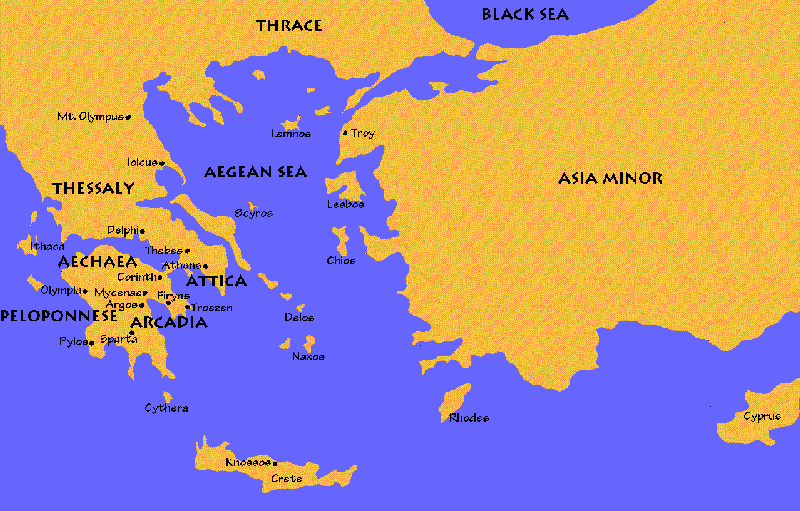
Tuesday, February 25, 2014
Today in Western Civ, we took notes on the Greek
civilization. The best part of class to me was the last 20 minutes. We talked
about the Odyssey and Iliad. Mr. Schick was telling us stories that are in the
book. I don’t really understand something though. Is the Iliad in the Odyssey
or are they two different books. I don’t really know, but the stories that we
were getting told were really interesting. Like the main guy, I forget his
name, and how he was at war for ten years, and then he was stuck at sea for ten
days. It was very interesting.
Monday, February 24, 2014
Today in Western Civ, we didn’t have Mr. Schick to teach us.
Basically all we did was look over the book and take notes on it. Then one of
the students came up and taught the class, and asked us questions. I think the
person who did it, did a pretty good job! Basically this assignment took all of
class to do. Other than that we didn’t do anything else.
LO3 Notes
Citizens and Communities: The Greek City-States
-Greek- city states were small places, generally consisting of no more than a town and a few square miles of surrounding country-side
-Athens, and Sparta were the same size as couple of U.S. counties, were giants among city-states
-Acropolis- a combination of fortress and temple precinct
-fortresses and temples were vitally important to the Greek city- states
- the Parthenon, or "place of maiden" overlooked the whole city
-the Greek language is the first that is known to have had a specific word for a member of such community; "citizen"
-the notation of citizenship seems to have originated partly in geography
-hoplites- a heavily armed and armored citizen- soldier of ancient Greece
-phalanx- a unit of several hundred hoplites, who closed ranks by joining shields when approaching the enemy
-monarchy- a state in which supreme power is held by a single, usually hereditary ruler
-oligarchy- a state in which supreme power is held by a small group
-triremes- massive fighting vessels with three banks of oars, used to ram or board enemy ships
-tyranny- rule by a self proclaimed dictator
-democracy- in ancient Greece, a form of government in which all adult male citizens were entitled to take a part in decision making
-reinforced by tradition and myth
- the communities that would become city-states were ruled by kings
- but other city-states that developed into large commercial centers, gave far more power to the majority
-in these large city-states social conflicts sometimes led to the emergence of tyranny.
-Greek city-states were narrow and exclusive
- each city-state had its own personality
-Spartans were descendants of Greeks
-Corinth and Thebes were oligarchies
-to the Athenians the spartan life was not worth living
- Athens was a war-like community
- Athens grew to become the wealthiest and one of the most powerful of Greek city-states
-aristocrats- members f prominent and long- established Athenian families
-aristocrats prided themselves with being excellent human beings
-aristocrats also had a strong sense of citizenship and responsibility to the community
-Athens went through monarchy which included oligarchy and tyranny and then soon they became a democracy
-Ostracism- banishment for ten years by majority vote of the Athenian Assembly
-in the Athenian democracy power rested in the assembly of adult male Christians
-husbands could with-ought dishonor fall in love and have sexual relations with teenage boys
-woman were highly visible in an area of family and community life that was just as important as politics and law
-the hundred thousand or so slaves in Athens were also very diverse group, not all of them living lives of total subjection and powerlessness
-most slave owners were small business people and farmers who kept only a few slaves and often worked side by side with them
- but there were many for whom slavery was a truly inhuman condition
- the Athenian laws and customs concerning woman, aliens, and slaves were not a special feature of democracy s such
-aliens were people from elsewere
-aliens were people from elsewere
Wednesday, February 19, 2014
Tuesday, February 18, 2014

Monday, February 17, 2014
Chapter 3
The First European Civilization: The Greeks 2200-400 B.C.
L03: compare the city states of Sparta and Athens, and describe how the Athenian from of democracy operated
Barbarian- way of life based on farming, warfare, and tribal organization that became widespread in Europe beginning around 2500 B.C
-the earliest Greek civilization was very much an offshoot of the ways of life of their eastern neighbors
-lands between the Mediterranean Sea and the Indian Ocean
-800 B.C finally emerged as "classical" Greek civilization
-Greek city-states were the first to practice citizen participation in government
Megalithic- massive rough cut stones used to construct monuments and tombs
-Stonehenge- a huge open- air monument built by a prosperous farming and trading people in the west of England, probably as a religious center
-it was repeatedly rebuilt over a period of several hundred years, until it reaches its final form about 2000 B.C.
-contains 160 massive boulders weighing up to 50 tons each
-the early Europeans cannot have had any sense of common identity, but in time most of them came to share a distinctive way of life
-this was probably the result of migrations of Indo- European nomads from the steppes that bordered Europe on the east
-instead of there earlier tongues, the peoples of the region began to speak languages of Indo- European origin that were the distant ancestors of Greek and Latin
Tribes- a social and political unit of consisting of a group of communities held together by common interests, traditions, and real or mythical ties of kinship
-formed loose alliances under warrior kings or queens pf exceptionally powerful tribes
-today people use the words barbarian or barbaric to describe someone who they think is less intelligent, refined, or humane than themselves
-in a period of three thousand years the European people came into contact with civilization
-Everything in their lives revolves around strength and courage
L03: compare the city states of Sparta and Athens, and describe how the Athenian from of democracy operated
Barbarian- way of life based on farming, warfare, and tribal organization that became widespread in Europe beginning around 2500 B.C
-the earliest Greek civilization was very much an offshoot of the ways of life of their eastern neighbors
-lands between the Mediterranean Sea and the Indian Ocean
-800 B.C finally emerged as "classical" Greek civilization
-Greek city-states were the first to practice citizen participation in government
Megalithic- massive rough cut stones used to construct monuments and tombs
-Stonehenge- a huge open- air monument built by a prosperous farming and trading people in the west of England, probably as a religious center
-it was repeatedly rebuilt over a period of several hundred years, until it reaches its final form about 2000 B.C.
-contains 160 massive boulders weighing up to 50 tons each
-the early Europeans cannot have had any sense of common identity, but in time most of them came to share a distinctive way of life
-this was probably the result of migrations of Indo- European nomads from the steppes that bordered Europe on the east
-instead of there earlier tongues, the peoples of the region began to speak languages of Indo- European origin that were the distant ancestors of Greek and Latin
Tribes- a social and political unit of consisting of a group of communities held together by common interests, traditions, and real or mythical ties of kinship
-formed loose alliances under warrior kings or queens pf exceptionally powerful tribes
-today people use the words barbarian or barbaric to describe someone who they think is less intelligent, refined, or humane than themselves
-in a period of three thousand years the European people came into contact with civilization
-Everything in their lives revolves around strength and courage
Friday, February 14, 2014
Name and describe three technological innovations or inventions of the ancient Egyptians:
Three technological inventions of
the ancient Egyptians were bricks, the wheel and the plow, and the calendar.
The bricks helped the Egyptians build their houses and help make them sturdy.
The wheel and the plow helped make the food because it was used to help the
fields, which was used to make food. The calendar was made by the Egyptians which
had 365 days.
Describe three important features of the Egyptian pyramids:
Three important features of
Egyptian pyramids included marble. Marble covered the tombs. The tombs were
indeed massive. The stones to build the pyramids, could have weighed between
2.5 and 15 tons.
Thursday, February 13, 2014
Describe the social hierarchy of the ancient Egyptians:
A hierarchy is someone who is
higher/more powerful than you. Hierarchies were very important and they were
mostly men, but sometimes they were woman. In the time of the Egyptians, there
were social hierarchies. These social hierarchies ranked from people who were
very important, to people who were not important at all.
The social hierarchies included the
pharaoh, officials, soldiers, scribes, merchants, artisans, farmers, slaves,
and servants. The most important of all and the high priest of the temple was
known as the pharaoh. He was also known as the “Lord of the Two Lands.” The
officials, were people who were nobles and priests and were also known as the “white
kilt class.” Next in line were the soldiers. These soldiers used wooden weapons
(bows, arrows), bronze tips, and chariots. The scribes kept records, told stories,
wrote poetry, anatomy, and wrote medical records. Next came the merchants.
These people accepted bags of grain for something in return. They kind of
started trading. Artisans carved statues showing battles and afterlife. Farmers
raised wheat, barley, lentils, and onions. And last in the social hierarchy,
came the slaves. The slaves helped the wealthy with household and child raising
tasks.
The social hierarchies in Egypt are
pretty important. People looked upon the hierarchies to help make decisions on
land. Woman were not usually considered to be hierarchies. They had more
important jobs taking care of domestic duties. Hierarchies in Egypt helped define
who was who in the town, and were all around very important.
Discuss the importance of the Nile River in the lives of Egyptians:
The Nile River was extremely
important in the lives of the Egyptians. The Nile was the major provider of
life. This river was very strange. It is strange, because it actually runs from
south to north which is not normal. Usually rivers run from north to south.
The Nile River would flood every
July. And every October it would leave behind rich soil. There was a part of
this river and it was called the Delta. The Delta is a broad, marshy,
triangular area of fertile silt. Managing this river required irrigation. The
Nile was used for many things including drinking, irrigation, bathing, and transportation.
Wooden boats were made to transport things over the Nile. Actually another
thing that the Nile helped with, was writing. This is because hieroglyphics,
which were earliest ancient writings, were written on papyrus. Papyrus was made
from mashed Nile reeds. The Nile was used for many useful things.
The Nile has helped everyone from
people back then, to people today. The Egyptian people based their whole lives
on the Nile. With ought the Nile, the people would not have survived, and this
means we wouldn’t be here today.
Subscribe to:
Comments (Atom)